
Parashat Ki Tavo | Deuteronomy 26:1–29:8
Some Torah verses live on the page; others are inscribed in our hearts and embedded in the way we live our lives.
“Blessed shall you be when you come, and blessed shall you be when you go.”
This verse from Parashat Ki Tavo is one of my all-time favorites. I love it so much that when I lived in Florida, I lettered it across the archway leading into—and out of—my home.
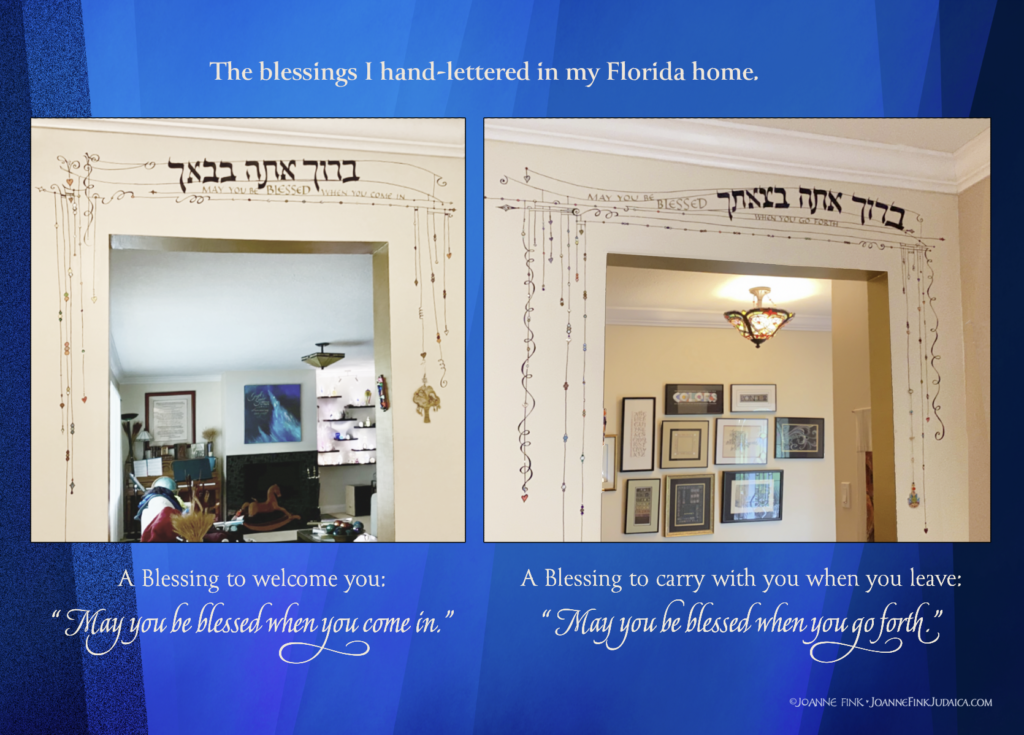
Everyone who walked through that doorway passed beneath a blessing. Family. Friends. Guests. Me.
The lettering on my walls—and on the journal page from 2016 below—remind me that wherever life takes us, we can look for the blessing, carry the blessing, and hopefully be a blessing to others.
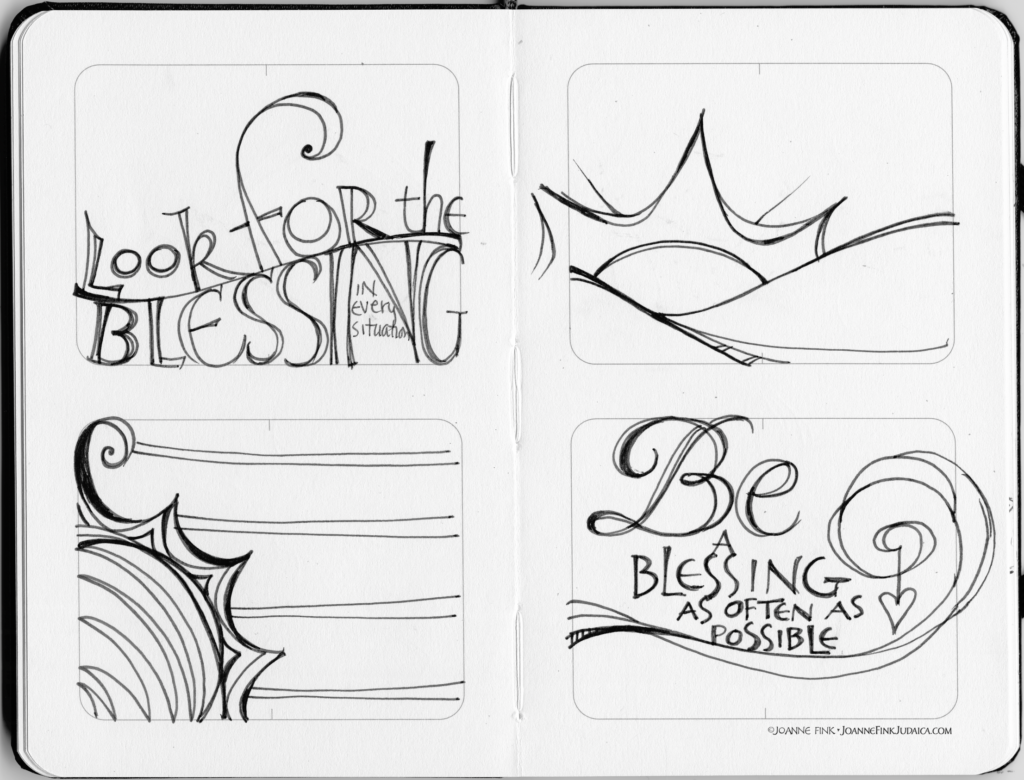
As I wrote in my journal in 2019, there are always blessings. The challenge is remembering to look for them!
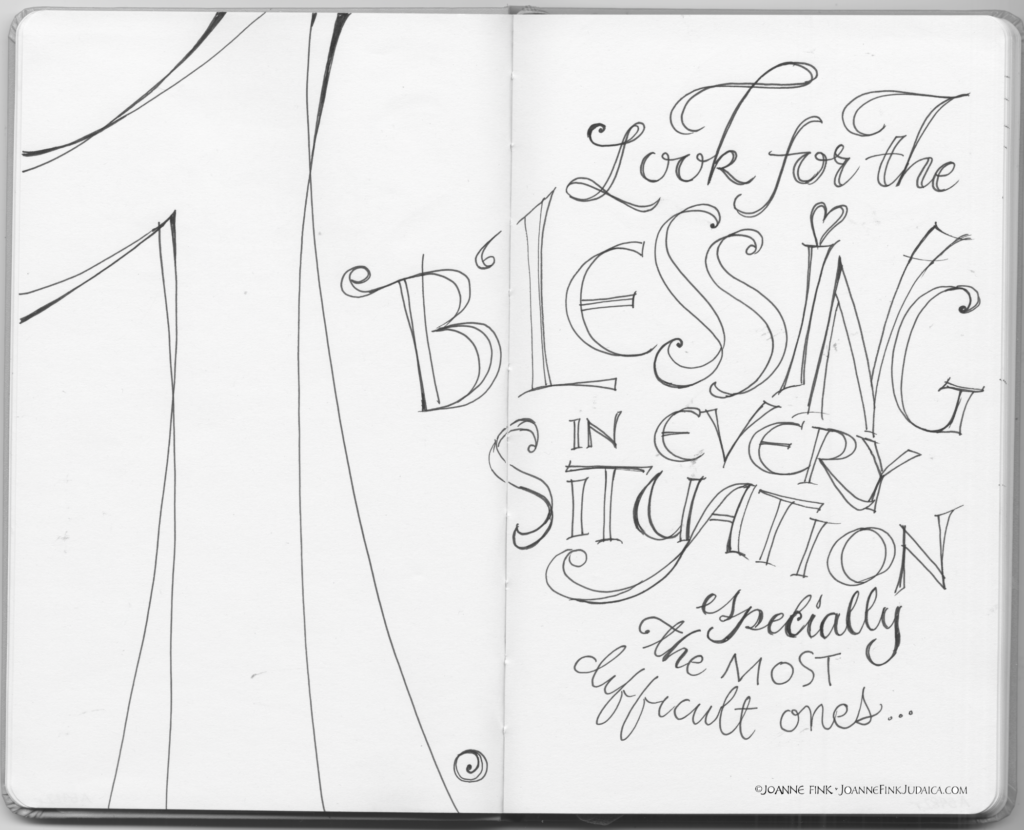
This journal page inspired the message I incorporated into my Torah illumination for this week’s parasha.
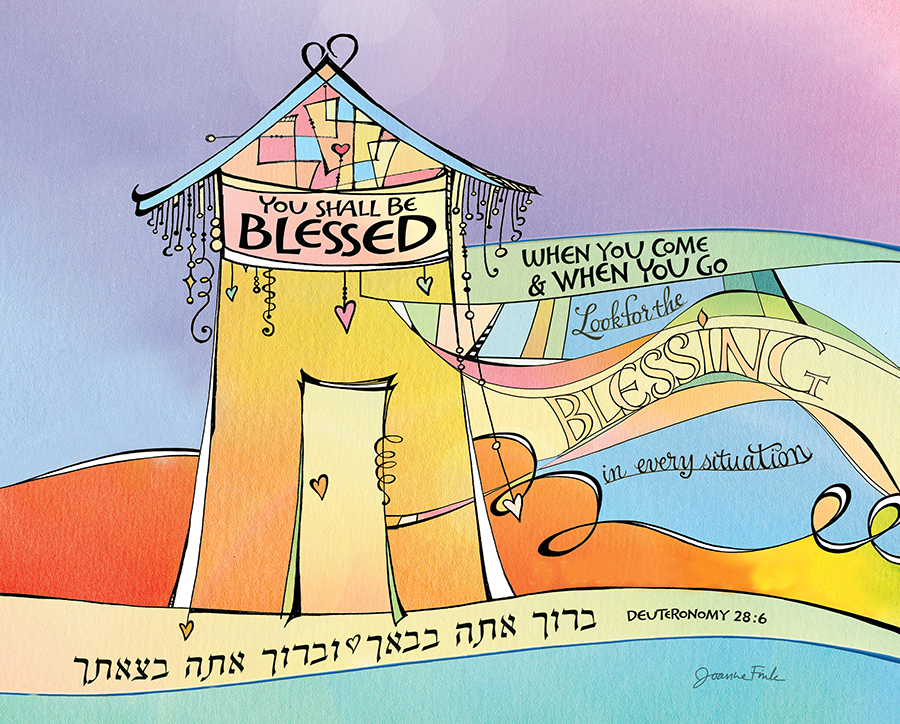
Blessed When You Come and When You Go
Parashat Ki Tavo contains both blessings and curses, vividly describing the possibilities that lie before the Israelites as they prepare to enter the Promised Land.
Among its many verses is this simple blessing:
“Blessed shall you be when you come, and blessed shall you be when you go.”
—Deuteronomy 28:6
Finding the Blessing
On a personal level, this past year has been excruciatingly difficult. My father fell twice, resulting in multiple hospital stays, surgery, and weeks of rehab. My daughter was diagnosed with stage four triple-negative breast cancer. Lots of people I love are going through REALLY challenging times—dealing with heartbreaking loss, health concerns, financial setbacks, and family estrangements. Communities I cherish are struggling with what is happening in the world. The sense of individual and communal overwhelm is palpable.
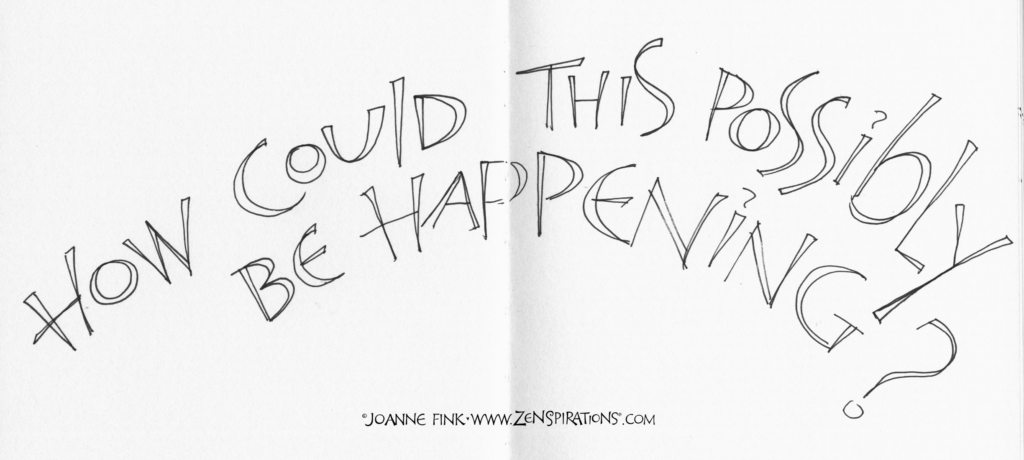
There are losses we would never choose, challenges we would gladly give back, and circumstances in which it can be almost impossible to see anything resembling a blessing.
But even when we cannot change what has happened, we can pay attention to what we carry with us.
We carry the love people have given us. We carry lessons learned through experience. We carry memories, relationships, traditions, values, creativity, and moments of connection.
And we carry the ability to reach out to those who are going through difficult times.
Perhaps being blessed in our coming and going is not simply about what we receive. Perhaps it is also about what we bring with us when we enter a room, a relationship, a community, or a new chapter of our lives—and what we leave behind when we go.
During Elul, we are invited to become more conscious of both.
What have we received during the year that is ending? What blessings do we want to carry forward?
And how might we use those blessings to help repair what is broken—in ourselves, in our relationships, in our communities, and in our world?
Here is my prayer for Parashat Ki Tavo.
Bountiful Blessings
Source of Blessings,
We thank you for the blessing of LIFE
and for the gift of this new day.
May we use it wisely.
We thank you for the blessing of LOVE
and for the people we hold close in our hearts.
May those we love and those they love
be blessed with health and strength.
We thank you for the blessing of CREATIVITY
and for the opportunity to express ourselves.
May we discover and hone our unique gifts
and use them to make a difference for others.
We thank you for the blessing of PERSPECTIVE
and for the ability to look at things in new ways.
May the challenges we face
be catalysts for soul growth.
We thank you for the blessing of LIGHT
and for the beauty that surrounds us.
May we take time each day
to pause, reflect, and reconnect.
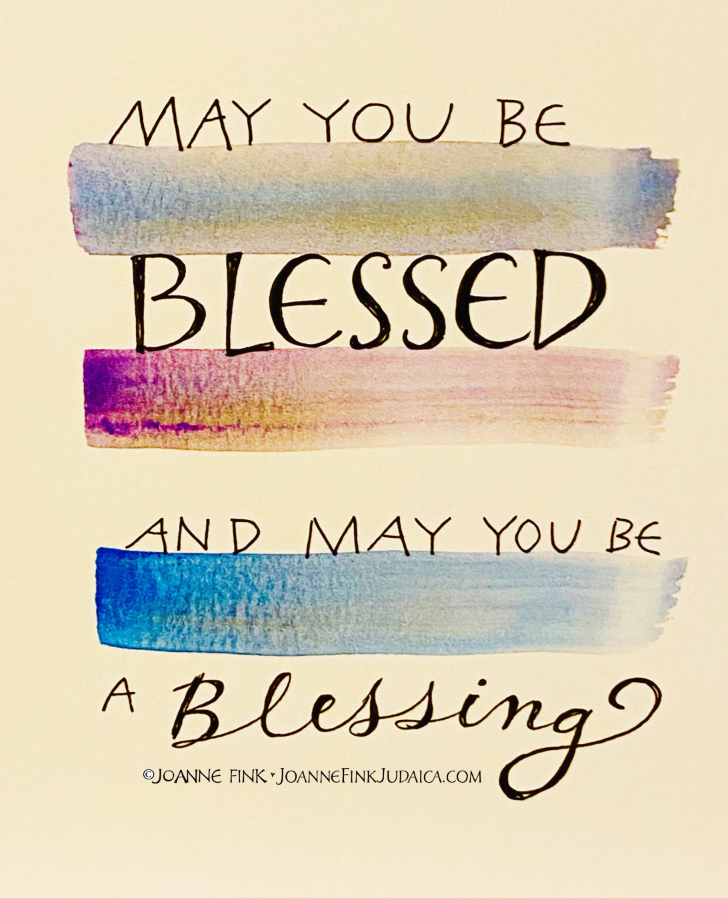
Bless us with the opportunity to be a blessing to others.
Enable us to keep hoping, keep searching, keep believing,
and to keep growing in awareness of our bountiful blessings.
The Blessings People Leave Behind
I was reminded of another kind of blessing during the first of three ZenScribe tutorials I gave this week.
I was demonstrating how easy it is to customize Visual Tefillah (prayer slides) when one of the participants apologetically interrupted to share the heartbreaking news that Dolly Parton had died.
We paused. And then, because we were already together creating in ZenScribe, I decided to demonstrate something else the platform makes possible. We created a commemoration for Dolly.

I have created hundreds of commemorations over the years because I know firsthand how meaningful it can be to have something tangible when someone you love dies—something that holds a name, a face, a memory, or an aspect of the person that you want to keep close.
A commemoration cannot take away grief.
But it can help us honor a life and recognize the blessings that person brought into the world.
Dolly Parton was loved not only for her extraordinary talent, but also for the joy, generosity, humor, kindness, and compassion she shared so freely. The enormous outpouring following her death is a reminder of how far one person’s influence can reach.
It makes me think again about the words over my Florida doorway.
We come.
We go.
And in between, we have the opportunity to leave blessings behind.
If you would like to create a personalized remembrance, greeting card, prayer, or something else for someone whose life has blessed yours, I invite you to join the ZenScribe Zoom demo I’m giving on Sunday, August 30, at 4:00 pm ET. Everyone who attends will be able to design, save, and share something special. Please sign up for a ZenScribe account in advance, and I’ll add some complimentary downloads so you can create whatever you’d like during the workshop.
Elul Exploration: Repair
This week in my Elul Exploration, our focus is Repair, the third step in our journey of:
Reflect. Release. Repair. Return.
Repair asks something different of us than reflection.
It asks us to move from awareness toward action.
Once we recognize a broken place, what can we do to help mend it?
Some repairs require an apology or a difficult conversation. Some call us to change our own behavior. Some involve forgiving ourselves. And some extend far beyond our individual lives into the sacred Jewish responsibility of tikkun olam—helping to repair our world.
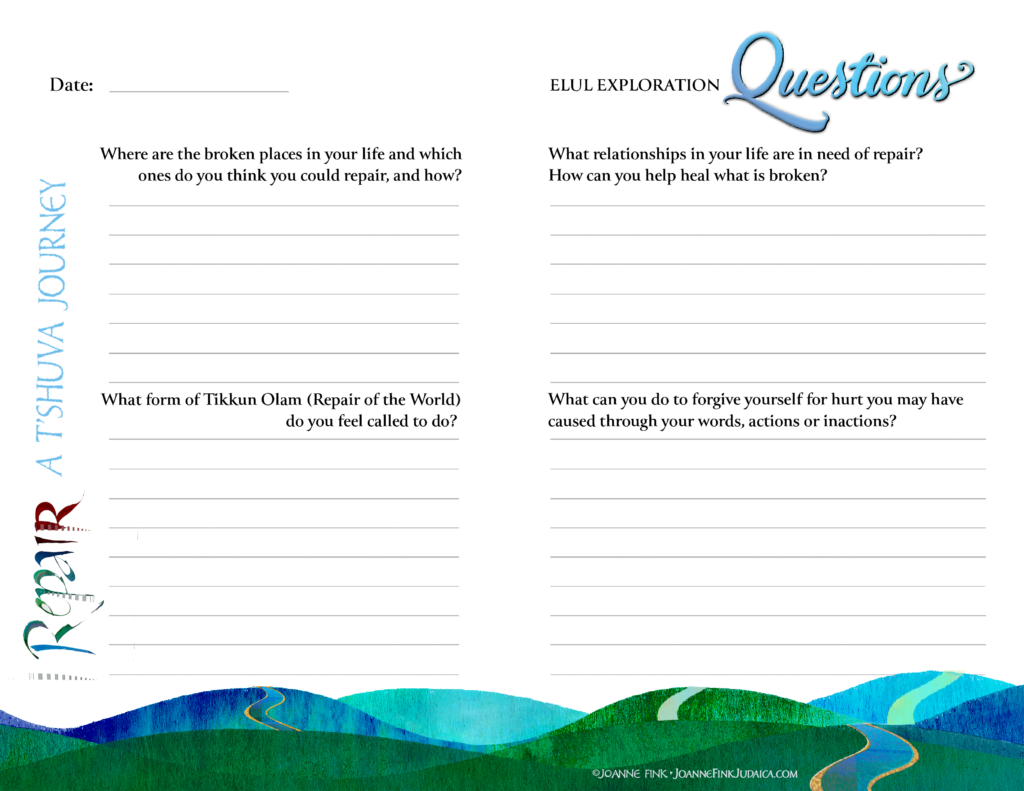
This is a page from my L’Chaim: Celebrate Life Judaic coloring book.

We cannot repair everything. But we can reach out in kindness to those who are going through difficult times. We can offer to listen or go for a walk. We can call, text, send a card, bring a meal, or simply let someone know we are thinking of them.
Guided Journaling
- Where are the broken places in your life, and which ones do you think you could repair, and how?
- What form of tikkun olam—repair of the world—do you feel called to do?
- What relationships in your life are in need of repair? How can you help heal what is broken?
- What can you do to forgive yourself for hurt you may have caused through your words, actions, or inactions?
A Blessing for the Journey
May we recognize the blessings
that accompany our coming and our going.
May we cherish the gifts
others have placed in our hearts.
May we have the courage
to repair the broken places in our lives.
May we use our creativity, compassion,
wisdom, and love to bring healing to our world.
May the blessings we have received
become blessings we share.
And as we cross the threshold toward a new year,
may we keep hoping, growing, giving,
and walking together toward light.
Enjoyed this post? Sign up to receive Joanne’s blog directly in your inbox.