
Parashat Va’etchanan | Shabbat Nachamu | Shema
This week, the Jewish calendar carries us from heartbreak toward consolation—and then toward love.
On Tisha B’Av, we mourn the destruction of the Temples in Jerusalem and remember the many losses our people have endured. This Shabbat is Shabbat Nachamu, the Shabbat of Consolation, named for the opening words of the Haftarah: Nachamu, nachamu ami—“Comfort, comfort My people.”
Only a few days later, we celebrate Tu B’Av, a day associated with love, connection, and hope.
I find meaning in the way these days are placed so close together.
The Jewish calendar does not ask us to deny grief or hurry past heartbreak. It gives us time to mourn. But it also reminds us that sorrow is not the end of the journey. Even when life has been changed by loss, love remains. Consolation becomes possible. The heart slowly begins to make room for joy again.
And often, that process begins with listening.

Shema: Listen
Parashat Va’etchanan contains some of the best-known and most beloved words in the Torah:
Shema Yisrael, Adonai Eloheinu, Adonai Echad.
Hear, O Israel: Adonai is our God, Adonai is One.
The first word is Shema—hear. Listen. Pay attention. Take these words deeply into your heart.
The Shema does not begin by asking us to speak, explain, persuade, or respond. It begins by asking us to listen.
Listening sounds simple, but true listening is an art.
It requires us to become quiet enough to hear what another person is actually saying. It asks us to pause before offering an opinion, giving advice, or deciding that we already understand. It invites us to listen not only to words, but also to what is left unsaid.
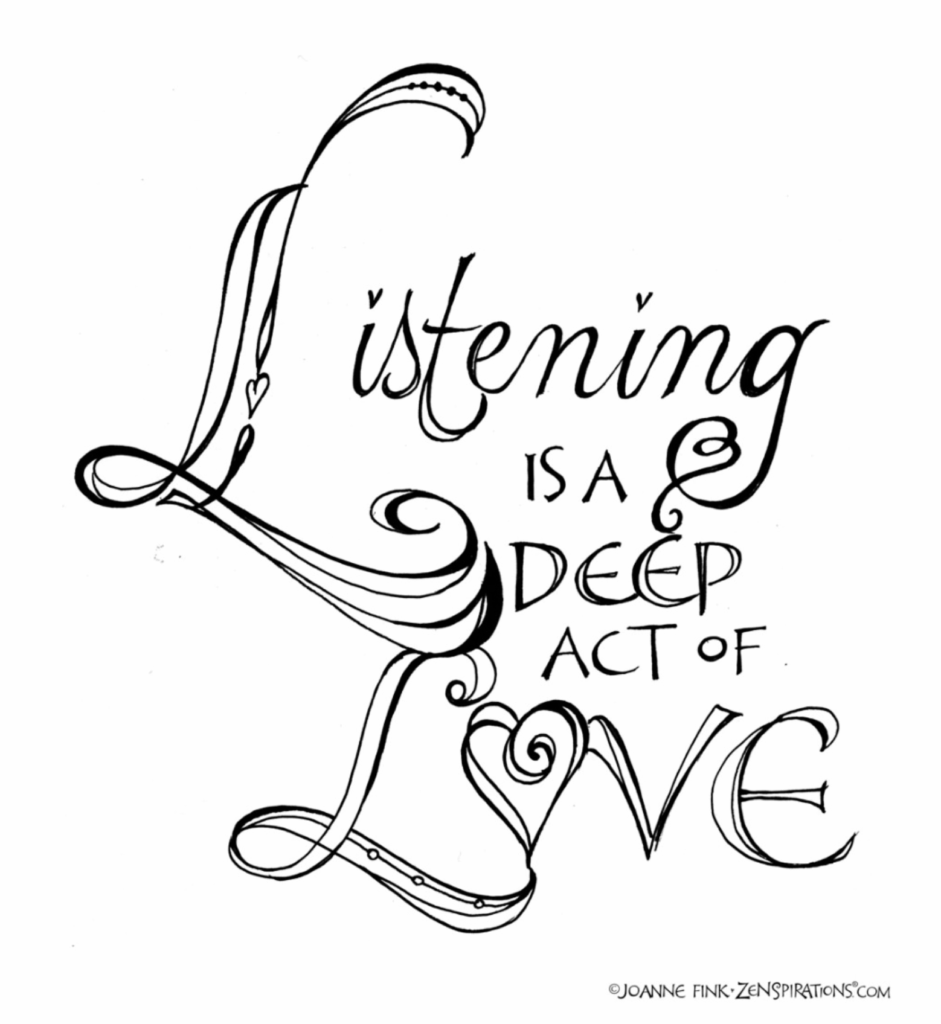
Sometimes love means knowing what to say.
Sometimes love means resisting the urge to say anything at all.
There are moments when the greatest gift we can offer is our complete presence: listening without judging, fixing, interrupting, or turning another person’s experience into a story about ourselves.
The Shema continues with a proclamation of oneness: Adonai Echad.
Oneness does not equate to sameness.
A musical harmony is created by different notes sounding together. Each note retains its own identity, yet becomes part of something larger. In the same way, our differences do not need to separate us. When we listen with respect and openness, our individual voices can become part of a greater harmony.
There is a tradition of saying the Shema before bed, and I sang the Shema to my son every night for the first thirteen years of his life. It’s the prayer I whisper to myself before I go to sleep. While my bedtime ritual may sometimes be on autopilot, each time I create a new visual interpretation, I try to notice something different within these ancient words.
The creative process itself can become an act of listening: listening to the words, listening to the materials, and listening for the direction the piece wanted to take.
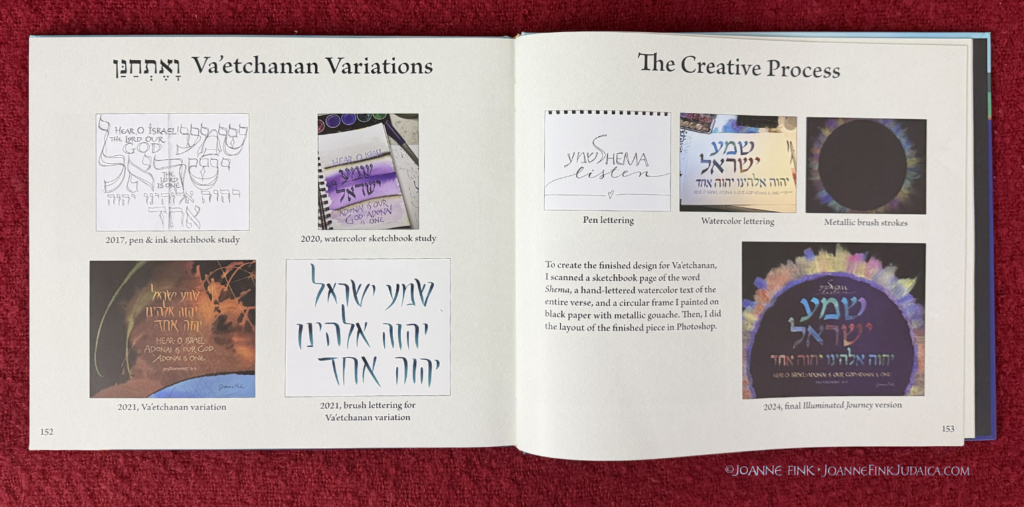
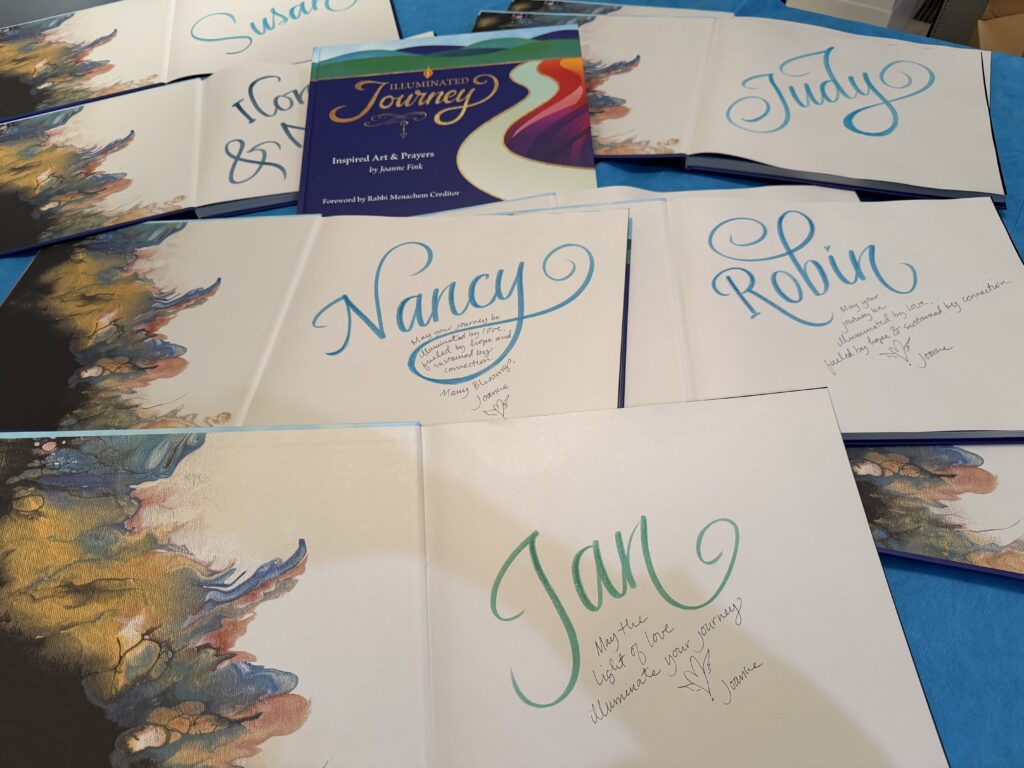
This spread appears in my new book Illuminated Journey, which pairs each weekly Torah portion with an original illumination and offers a glimpse into the spiritual and creative journey behind the work. I’d be happy to sign and personalize a copy of Illuminated Journey for you or someone you love.
Immediately after the Shema, the Torah tells us:
V’ahavta et Adonai Elohecha—You shall love Adonai your God with all your heart, with all your soul, and with all your might.
Listening and loving are placed beside one another.
Perhaps this is because we cannot fully love someone without being willing to hear them.
Love asks us to listen to the people closest to us, even when their experiences differ from our own. It asks us to listen to those whose voices are overlooked or dismissed. It asks us to listen to our own souls and recognize when we need rest, support, connection, or change.
It also asks us to listen for the voice of the Divine—in prayer, in Torah, in silence, in the natural world, and in the people we encounter.
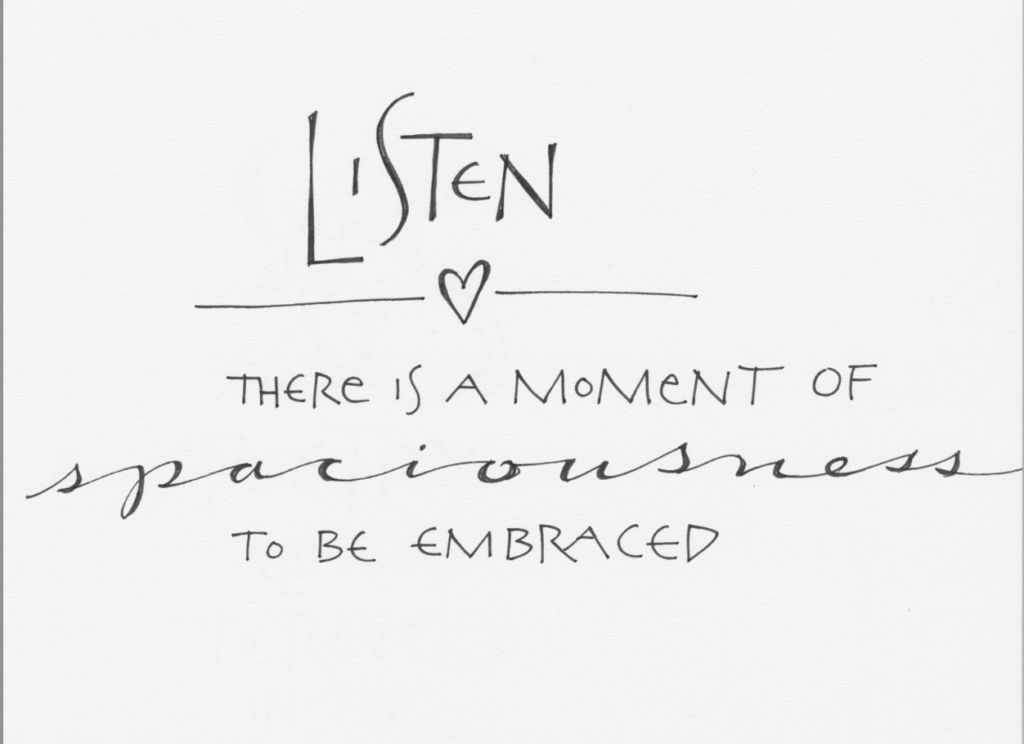
Listening creates space.
Within that space, understanding can grow. Trust can deepen. Healing can begin. We may discover that beneath our apparent differences are shared hopes, shared fears, shared needs, and a shared desire to be seen and valued.
When we listen with our hearts, we move closer to one another.
When we listen for the sacred within one another, we move closer to Oneness.
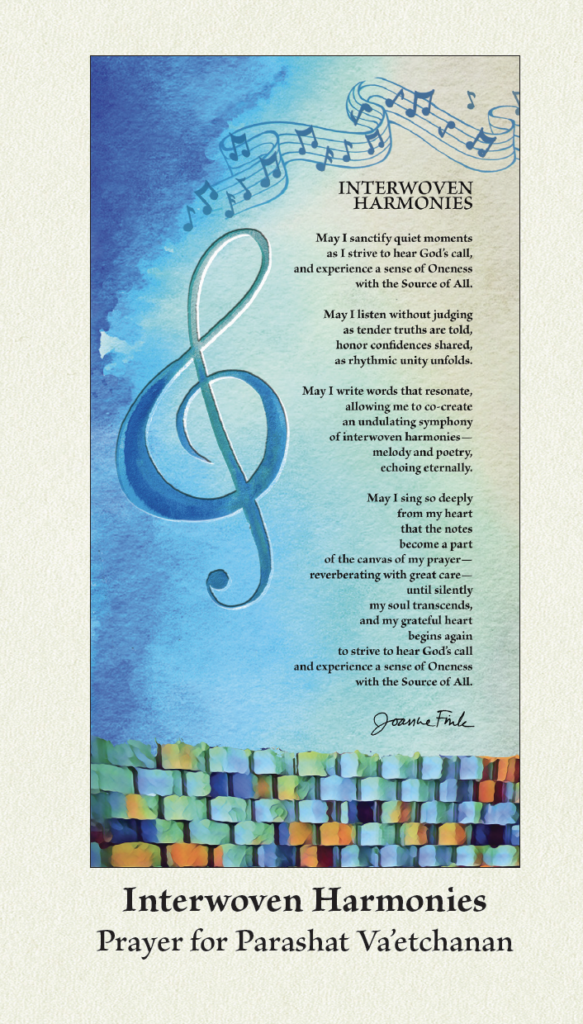
Interwoven Harmonies
May I sanctify quiet moments
as I strive to hear God’s call,
and experience a sense of Oneness
with the Source of All.
May I listen without judging
as tender truths are told,
honor confidences shared,
as rhythmic unity unfolds.
May I write words that resonate,
allowing me to co-create
an undulating symphony
of interwoven harmonies—
melody and poetry
echoing eternally.
May I sing so deeply from my heart
that the notes become a part
of the canvas
of my prayer—
reverberating
with great care—
until silently
my soul transcends
and my grateful heart
begins again
to strive to hear God’s call
and experience a sense of Oneness
with the Source of All.
Celebrating Love on Tu B’Av
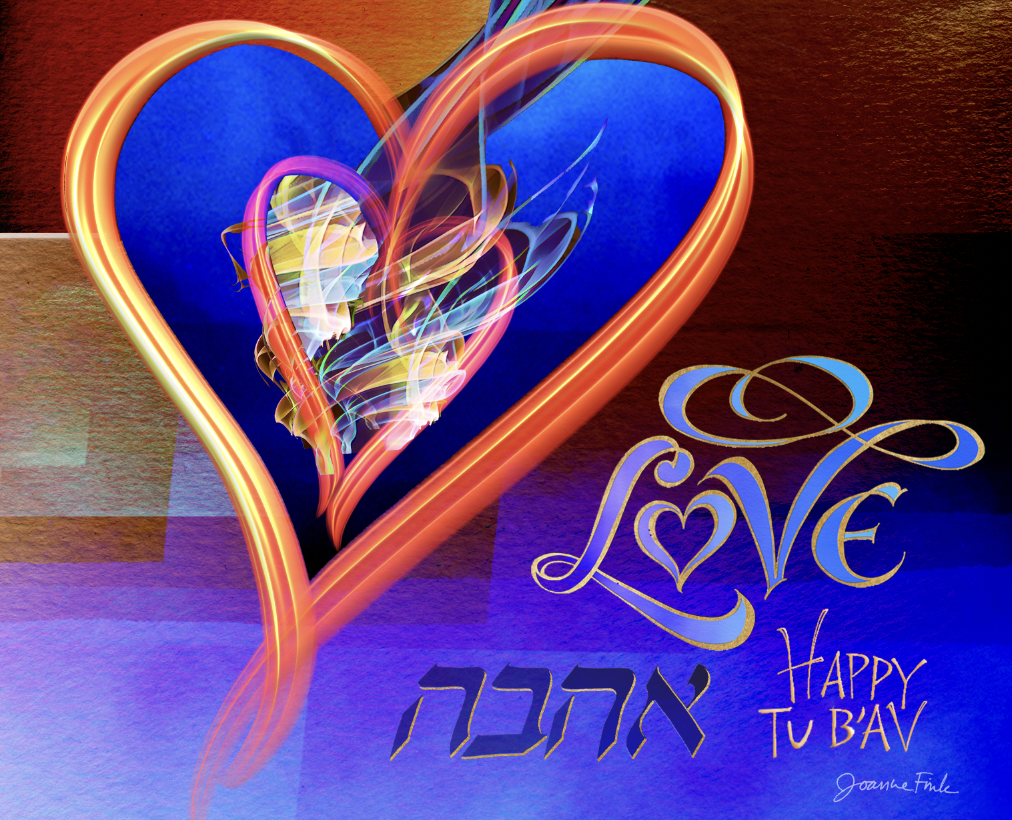
Tu B’Av is often described as the Jewish holiday of love.
It is easy to associate a celebration of love primarily with romance, but love takes many forms.
Love is found in friendship, family, partnership, community, caregiving, compassion, faith, and service. It lives in the relationships that sustain us and in the memories of people who are no longer physically beside us.
Love can look like celebrating together.
It can also look like sitting beside someone who is grieving.
Love may mean showing up when life is difficult, making a phone call, preparing a meal, offering a ride, remembering an important date, or asking, “How are you really doing?”—and then making time to hear the answer.
Sometimes love requires forgiveness.
Sometimes it requires courage.
Sometimes love asks us to repair a relationship. At other times, love requires us to establish a boundary that protects dignity, safety, and well-being.
Tu B’Av can also be complicated for people who are lonely, widowed, divorced, estranged, grieving, or longing for a relationship they do not currently have. A day devoted to love may heighten our awareness of what—or whom—we are missing.
But love does not disappear simply because its form changes.
I believe that the love we have shared becomes part of who we are. It shapes the way we move through the world, the way we care for others, and the light we are able to offer.
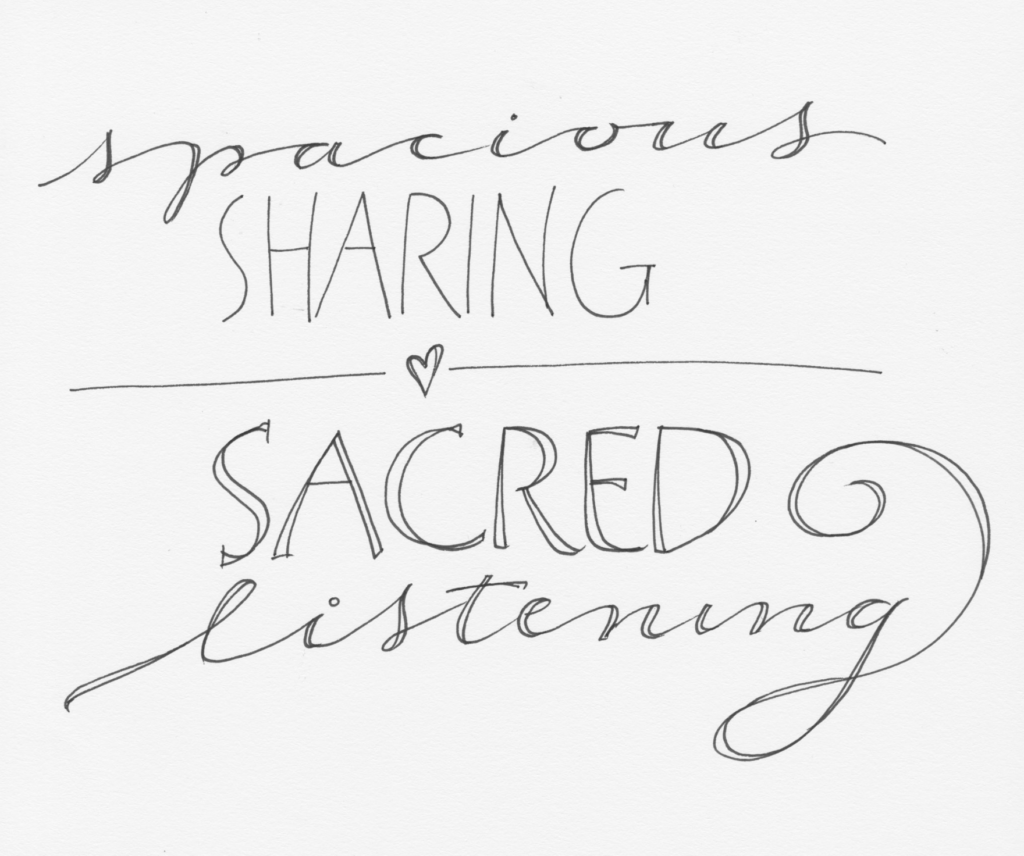
Perhaps the invitation of Tu B’Av is not only to celebrate the love already present in our lives, but also to consider how we are nurturing it.
Are we listening to the people we love?
Are we expressing our appreciation?
Are we making room for honest conversation?
Are we offering our full presence—or merely waiting for our turn to speak?
Love is more than a feeling. It is a practice.
Each time we listen with patience, speak with compassion, honor another person’s truth, or choose connection over indifference, we help create an interwoven harmony of love.
Guided Journaling Questions
- Who helps you feel heard, accepted, and understood?
- What makes it difficult for you to listen without judging, advising, or preparing a response?
- What do you hear when you create space for silence?
- How do you express love through your everyday choices?
- Which relationship in your life would benefit from greater attention or care?
- What boundary might help protect love, dignity, trust, or well-being?

A Blessing for Listening and Love
May we quiet the noise around and within us
so we can hear what truly matters.
May we listen with patience,
speak with compassion,
and make room for one another’s truths.
May those who are grieving find consolation.
May those who are lonely find connection.
May those whose relationships are strained
find pathways toward understanding.
May we recognize the many forms love takes,
and may the love we give and receive
bring healing, harmony, hope,
and greater Oneness to our world.
Enjoyed this post? Sign up to receive Joanne’s blog directly in your inbox.